Pine trees are a common sight in yards and windbreaks around the Wichita area, and they are valued for staying green all year. So when a pine starts turning brown, homeowners notice quickly. Some browning is perfectly normal. Some is a sign of stress the tree can recover from. And some means the tree is dying and should come down before it becomes a hazard. Here is how to tell the difference, and what to do next.
Normal Browning: Seasonal Needle Drop
Every pine sheds its oldest needles. In late summer and fall, the needles closest to the trunk on the inside of the canopy turn yellow or brown and fall, while the needles at the tips of the branches stay green. If the browning is limited to older, interior needles and the new growth at the branch tips looks healthy, the tree is most likely just going through its normal cycle.
Browning From Stress
Kansas weather is hard on evergreens. Hot, dry summers, drought, winter wind and cold snaps can all cause needles to brown. Stress browning often shows up on the side of the tree that faces the prevailing wind or the afternoon sun, or it appears across the tree after a long dry spell.
A stressed pine may recover with good care:
- Water during dry periods, including occasional deep watering in winter when the ground is not frozen.
- Mulch around the base to hold moisture, keeping the mulch a few inches away from the trunk.
- Avoid damaging the roots with construction, trenching or heavy equipment.
When Browning Is More Serious
Some browning is a warning sign. Be concerned if you see:
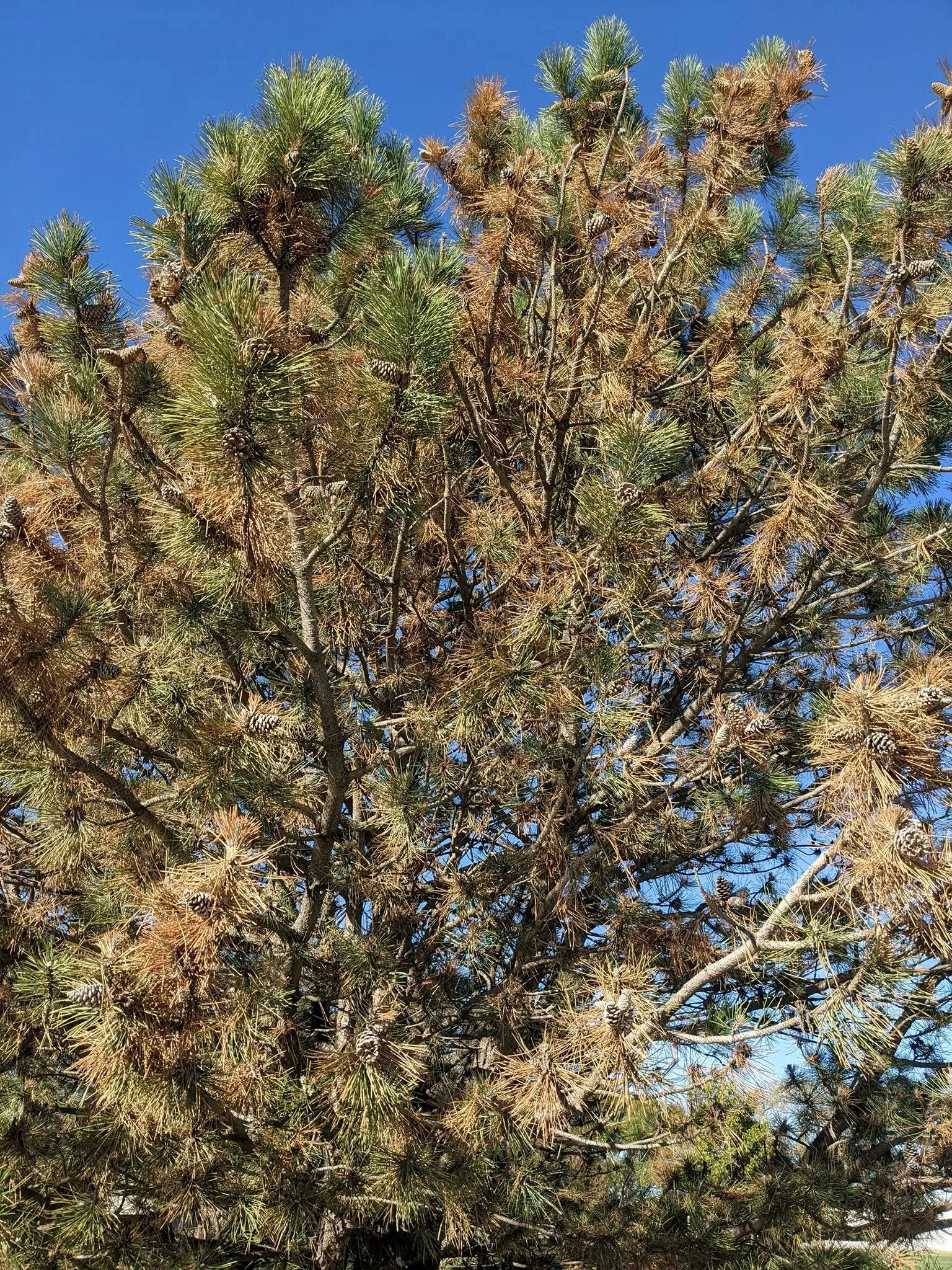
- The whole tree turning brown quickly, sometimes over just a few weeks or months
- Needles that turn brown but stay on the tree instead of dropping
- Browning that starts at the top or in random branches and spreads
- Sap that has stopped flowing, or dry, brittle branches that snap easily
- Small holes in the bark or sawdust at the base of the trunk
Pine wilt is a well-known problem for pines in Kansas, especially Scots pine and Austrian pine. It is caused by a tiny nematode carried from tree to tree by a beetle, and an infected tree usually dies within a matter of months once symptoms appear. There is no cure for a tree that already has it. Bark beetles and other problems can produce similar symptoms, so a proper diagnosis matters. Your county extension office can test a sample if you want to confirm the cause.
Why a Dead Pine Should Come Down
A dead pine dries out and becomes brittle. Branches can snap in the next windstorm, and the whole tree can fail without much warning, especially one that stands near a house, driveway, fence or play area. Dead pines also burn easily.
If pine wilt is the cause, removing the tree promptly matters for your other trees, too. The usual advice is to remove infected pines and chip or destroy the wood before spring, rather than keeping it as firewood, so the beetles that spread the disease do not emerge from it and move on to healthy pines nearby.
What We Can Do
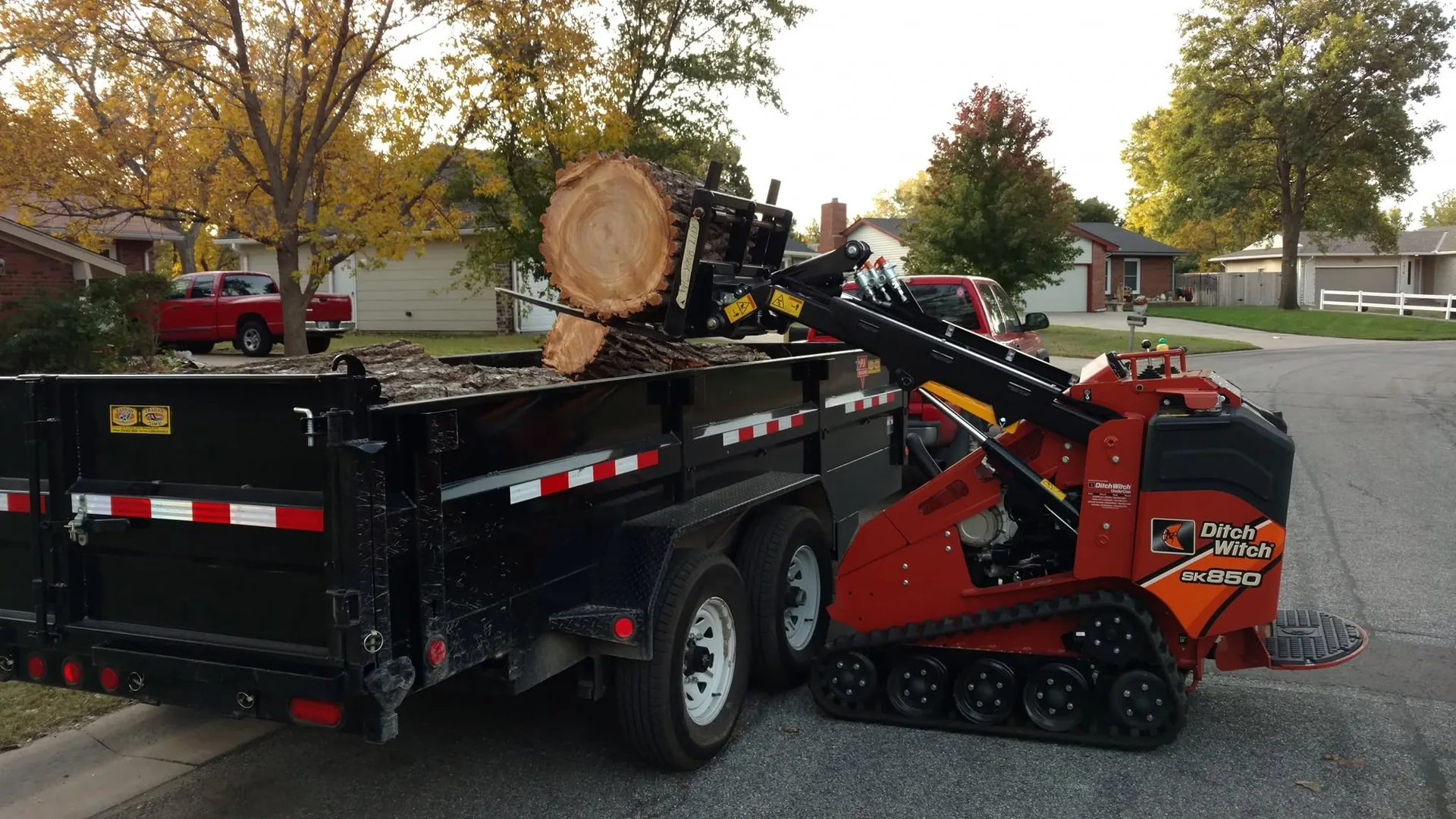
If a pine on your property is browning and you are not sure why, have it looked at sooner rather than later. If it can be saved, trimming out dead branches and caring for the tree may be all it needs. If it cannot, we can take it down safely, chip the branches on site, haul the wood away and grind the stump so you can replant.
Attention To Details is a licensed and insured tree company in Rose Hill serving the Wichita metro, with over 55 years of combined experience on our crew. See our tree removal service, or call or text (316) 706-2423, seven days a week from 7AM to 9PM.