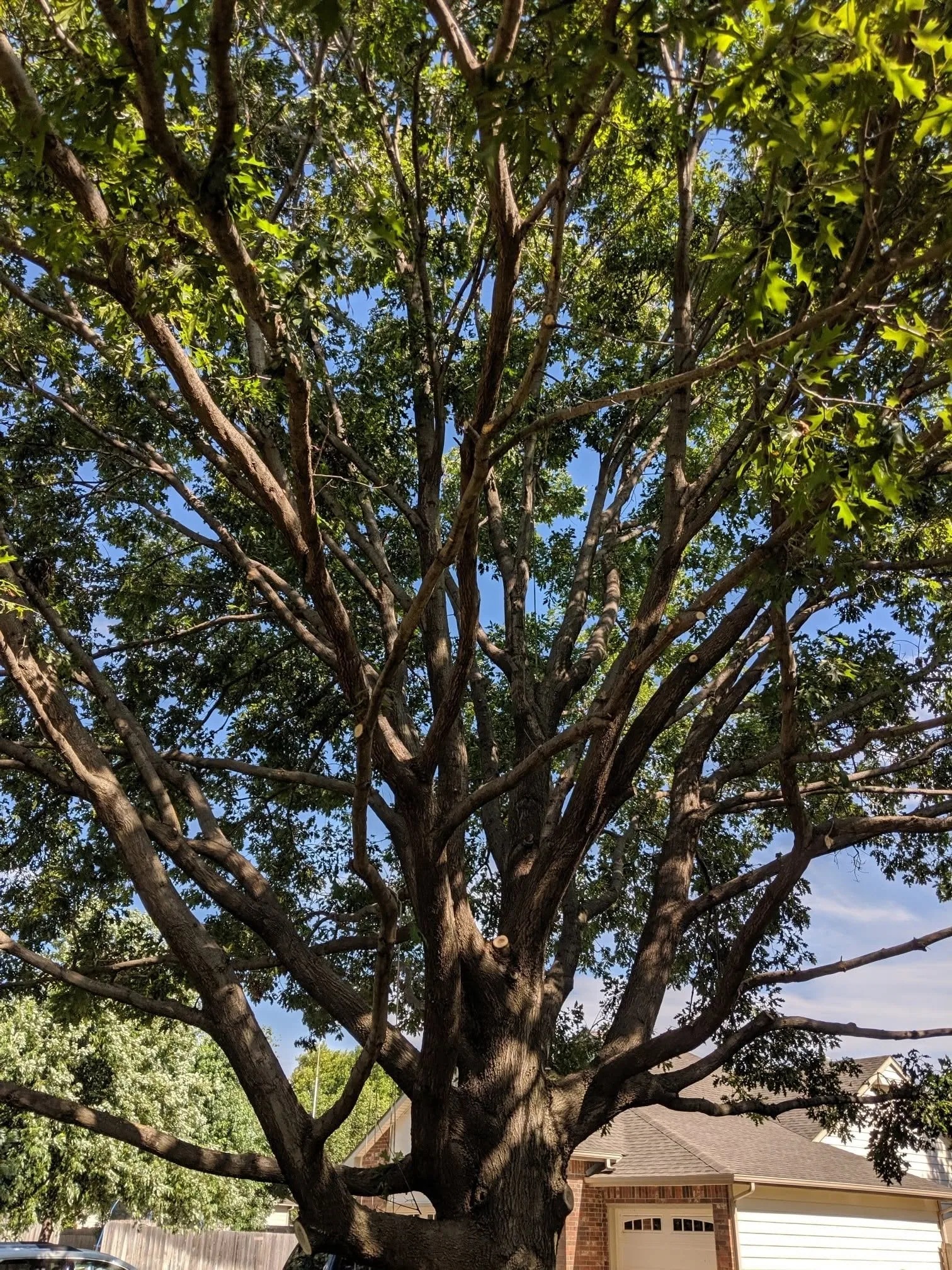
Few things make a homeowner more nervous during a Kansas windstorm than the sound of branches scraping across the roof. Limbs that hang over a house look harmless on a calm afternoon, but they can cause real damage over time and serious damage in a single storm. Here is what to watch for, and when it makes sense to have overhanging branches trimmed back.
Why Overhanging Branches Cause Trouble
Branches over a roof cause problems in a few different ways. The most obvious is impact: a limb that breaks in high wind, heavy rain or an ice storm can puncture shingles, crack decking or damage gutters on the way down. Even branches that never break can do harm, though.
- Abrasion. Limbs that rest on or rub against the roof wear away the granules on asphalt shingles, which shortens the life of the roof.
- Debris buildup. Leaves, needles and twigs collect in valleys and gutters, holding moisture against the roof and causing water to back up during heavy rain.
- Shade and moisture. A roof that never dries out is more prone to moss, algae and rot.
- Easy access for pests. Squirrels and raccoons use overhanging limbs as a bridge to the roofline, attic vents and soffits.
How Much Clearance Is Enough?
A good general goal is to keep branches from touching the roof at all, with enough space that wind cannot swing them into the shingles. On many homes that means several feet of clearance between the roofline and the nearest limbs, and more for trees that grow fast or have long, heavy limbs that sway in the wind.
The right amount depends on the tree. A young ornamental tree near the house needs very different treatment from a mature oak or cottonwood whose limbs reach over the whole back of the home. The goal is always to create clearance without damaging the health or the shape of the tree.
Trim the Right Way, Not Just the Closest Branch
It is tempting to grab a saw and cut whatever touches the house, but poor cuts can create bigger problems later. Cutting a limb in the middle of its length leaves a stub that heals poorly and often sprouts a cluster of weak shoots that grow right back toward the roof. Removing too much of the canopy at once stresses the tree.
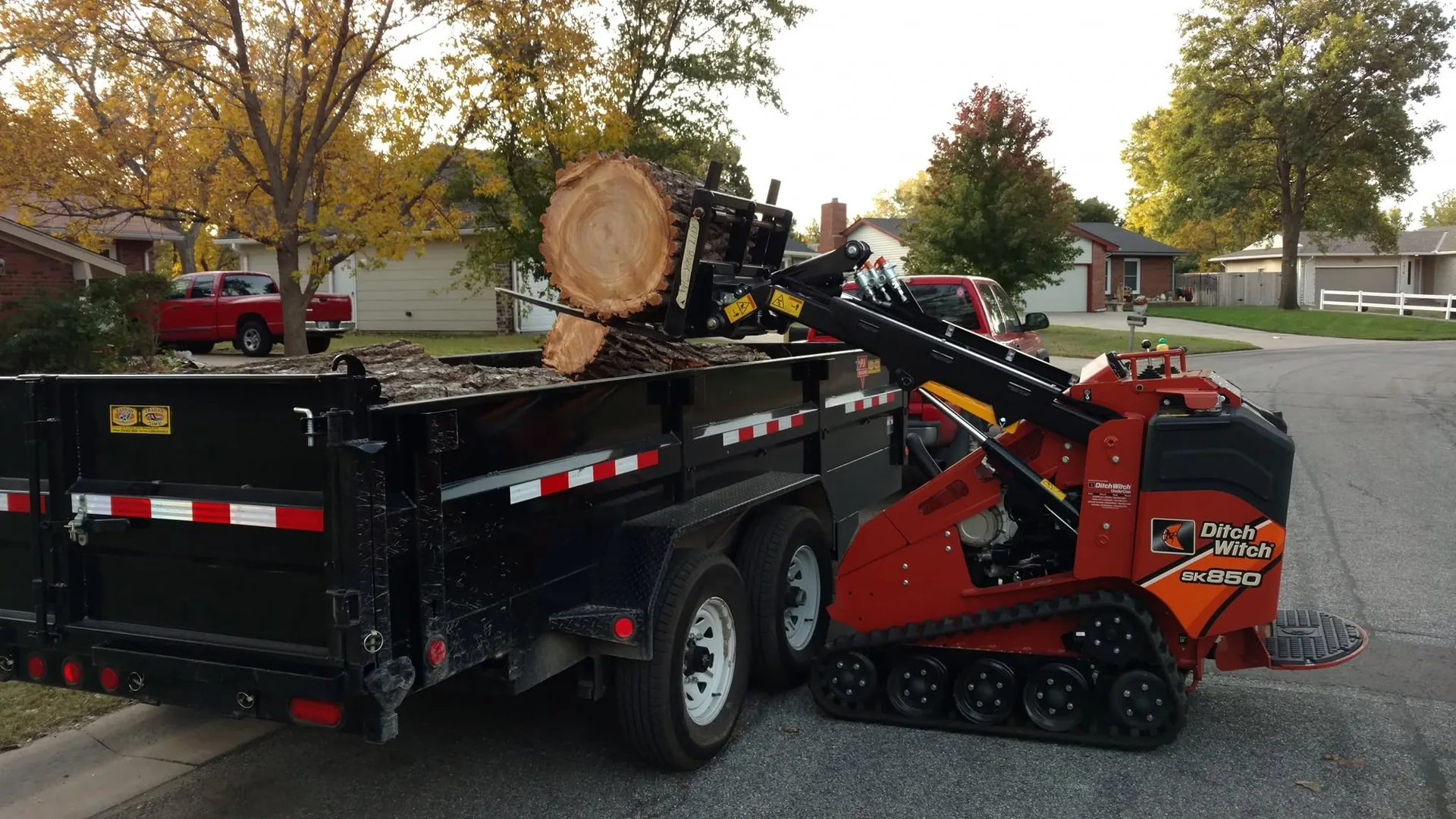
Proper trimming removes branches back to a healthy junction, so the tree can seal the wound and keep a natural shape. On a large limb over a house, the branch also has to come down in controlled sections so nothing drops onto the roof. That is where a bucket truck, ropes and an experienced crew make the difference.
Signs It Is Time to Call
You do not have to wait for a storm to tell you there is a problem. Consider having overhanging branches looked at if you notice:
- Branches touching or brushing the roof, gutters or siding
- Dead limbs, missing bark or cracks in branches above the house
- Gutters that fill with leaves and twigs every few weeks
- Squirrels or other animals getting onto the roof
- A large limb that leans or hangs lower than it used to
A Word About Power Lines
If branches are touching or growing into the power line that runs to your home, do not try to trim them yourself. Contact your electric utility first; they can tell you how they handle lines in your area and whether service needs to be disconnected before work begins. Never let anyone use a ladder or pole saw near an energized line.
Let Our Crew Handle It
Attention To Details is a licensed and insured tree company based in Rose Hill, with over 55 years of combined experience on our crew. We trim branches away from roofs, gutters and siding across the Wichita metro, and we clean up when the work is done. Learn more about our tree trimming service, or call or text us at (316) 706-2423. We answer seven days a week, 7AM to 9PM.