Cottonwoods are one of the most familiar trees in Kansas. They line creeks and fence rows, shade older neighborhoods and tower over farmsteads across the Wichita area. A mature cottonwood can be a beautiful tree. It is also one of the trees that most needs a watchful eye when it grows close to a home, because the same traits that make it impressive can make it risky.
Fast Growth, Weak Wood
Cottonwoods grow fast, and they get big. A tree planted a few decades ago can easily be the tallest thing in the yard. That fast growth comes with a tradeoff: cottonwood wood is relatively soft and weak compared with slower-growing hardwoods like oak.
In practical terms, that means:
- Limbs break more easily in high wind, heavy rain and ice, and a single cottonwood limb can be as large as a small tree.
- Branches can drop without warning, even on a calm day, particularly large limbs that have grown long and heavy.
- Internal decay is common in older trees, and it is not always visible from the ground.
Big Roots and Messy Seasons
Cottonwoods look for water, and their root systems spread wide. Close to a house, they can interfere with sidewalks, driveways, foundations and sewer lines. They also shed: the cotton that gives the tree its name drifts through the air in late spring, clogging gutters, window screens and air conditioning units, and the trees drop a steady supply of twigs and leaves through the year.
Warning Signs to Watch For
Keep an eye on any large cottonwood near your home, driveway or play area, and call for an inspection if you notice:
- Dead branches in the canopy, especially large ones over the house
- Cracks or splits in the trunk or where large limbs meet the trunk
- Cavities, fungus or mushrooms on the trunk or at the base
- A new lean, or soil heaving up on one side of the tree
- Large limbs that have already broken in a recent storm
Trimming a Cottonwood
Many cottonwoods can be kept safely with the right trimming. Removing dead wood, reducing heavy limbs that extend over the house and thinning the canopy so wind passes through can all lower the risk of breakage. The work should be done properly, with cuts made back to healthy junctions. Topping a cottonwood, by cutting the main trunk or limbs back to stubs, tends to make the problem worse: the tree pushes out clusters of fast, weakly attached shoots that break even more easily. See our tree trimming service for more on how we approach it.
When Removal Is the Better Choice
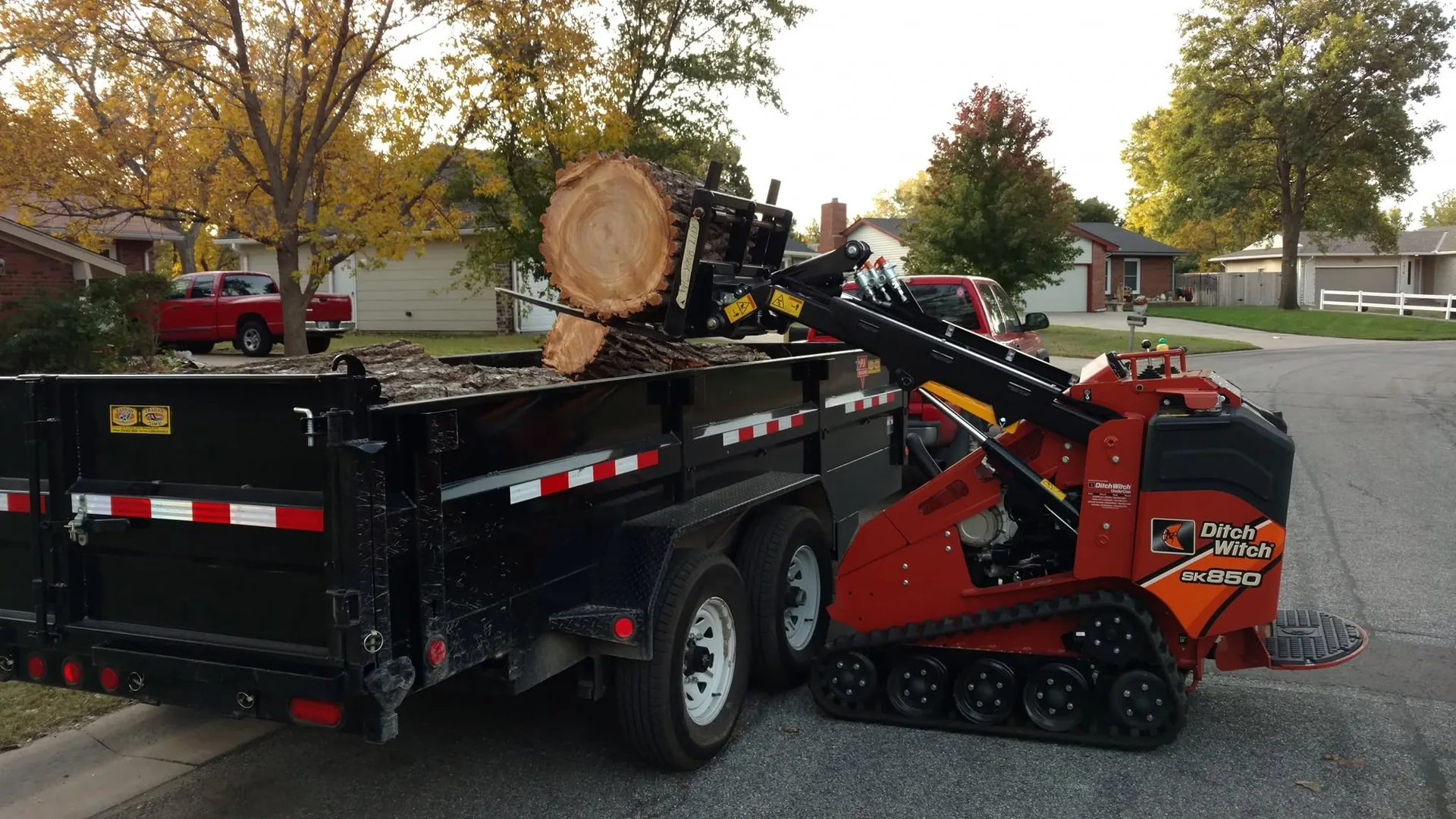
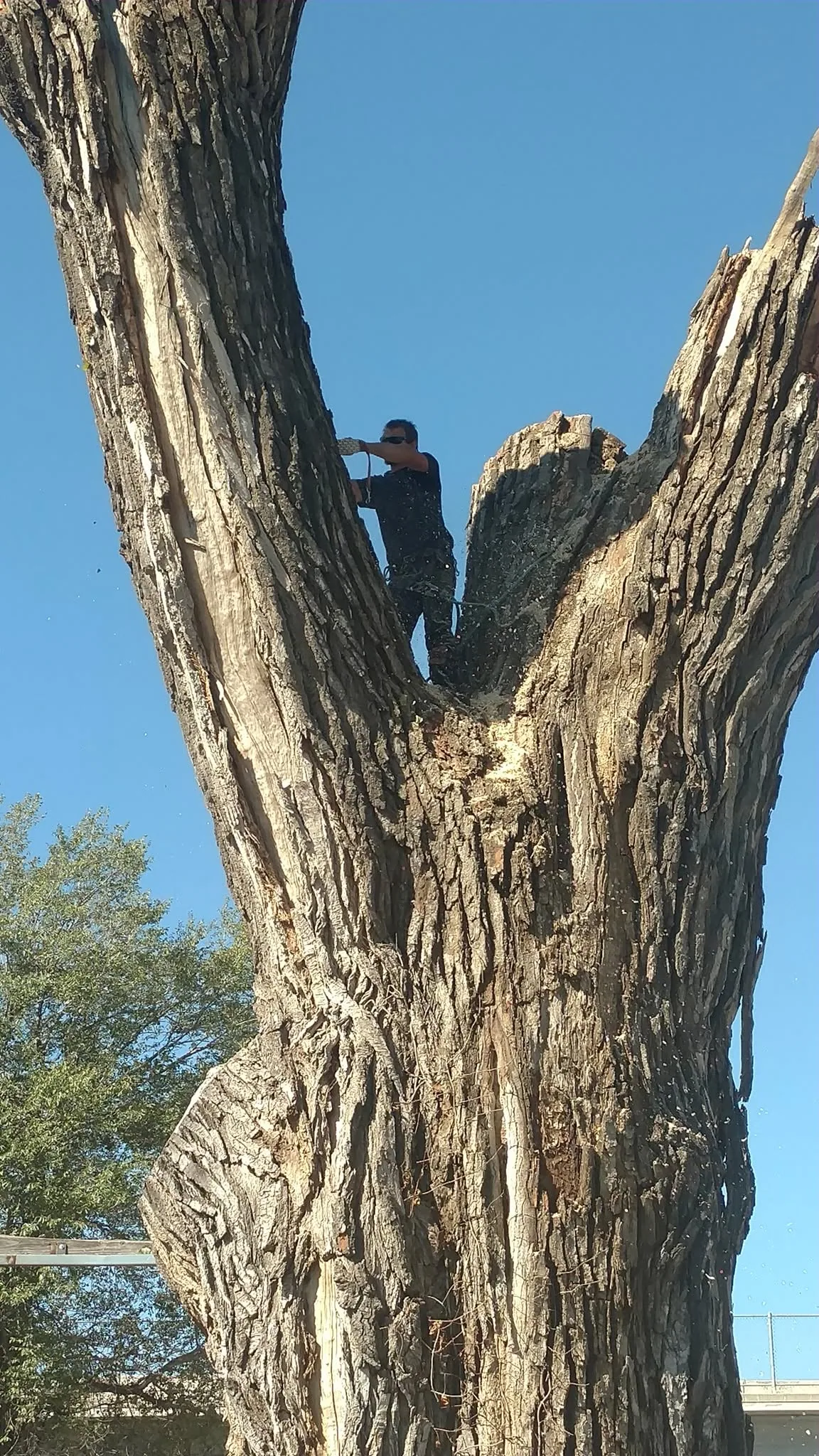
Sometimes the safest answer is to take the tree down. That is often the case when a cottonwood has significant decay, a cracked trunk, a dangerous lean, or limbs over the house that cannot be reduced without leaving the tree unbalanced. Removing a large cottonwood near a home is skilled work. It usually means taking the tree down in sections from the top, rigging heavy pieces to the ground with ropes, and working around the house, fences and power lines.
Our crew takes on large cottonwood removals across the Wichita area, including trees that tower over homes and roads. Learn more about our tree removal service.
Talk to a Local Crew
If you have a big cottonwood on your property and are not sure whether it needs trimming, removal or nothing at all, we are happy to take a look. Attention To Details is a licensed and insured tree company based in Rose Hill, with over 55 years of combined experience on our crew. Call or text (316) 706-2423, seven days a week from 7AM to 9PM.